Draw a Flag Hardest Flags to Draw Accurately
C-tier and high B-tier flags that punish detail chasing—and the shortcuts that still win rounds.
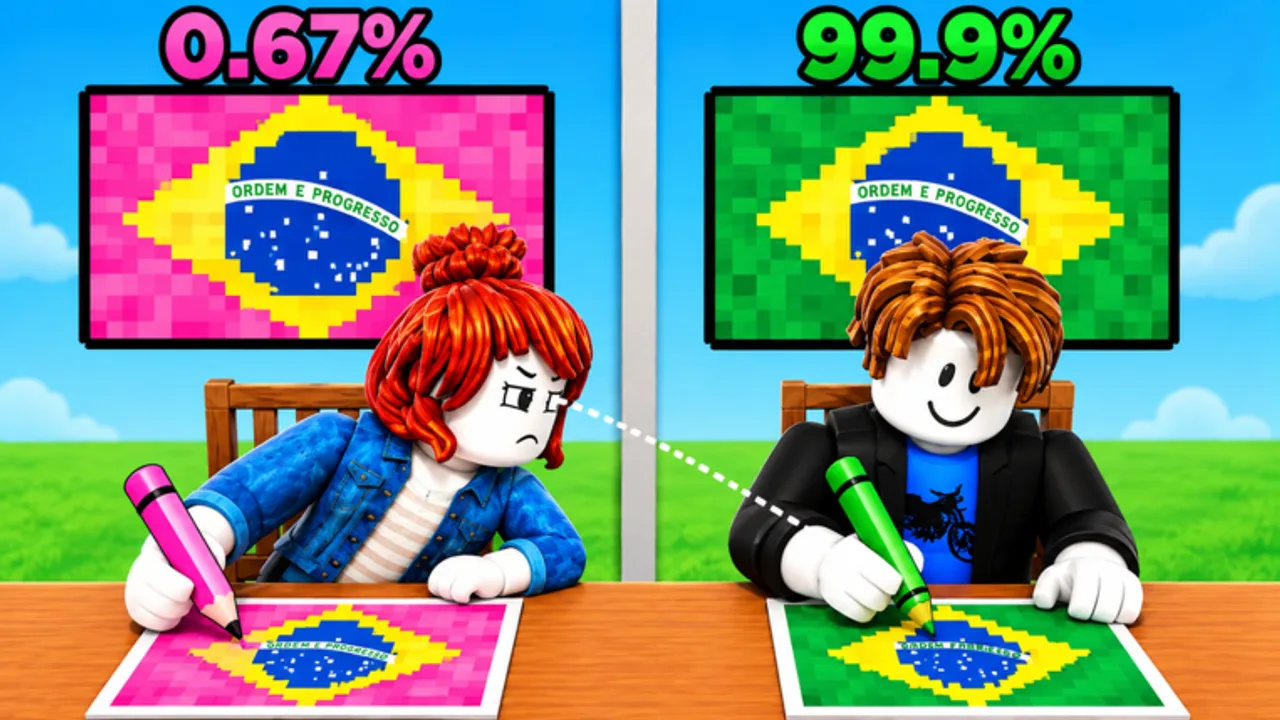
Some Draw a Flag! rounds feel unfair until you learn what the scoring system actually rewards. On a pixel canvas with a ticking timer, the hardest flags share the same traps: tiny high-contrast emblems, dense star fields, calligraphy or complex beasts, and silhouettes that refuse to be a simple rectangle. This page ranks those designs for drawing difficulty under time pressure, explains why they tank accuracy, and shows shortcuts that still score well against players who try to paint every crest line.
Cross-train with Easiest Flags so your fundamentals stay sharp, and read Accuracy Tips for fill-order habits that apply to every C-tier flag. Return to the Tier List Hub when you want the full S–C map.
Why “hard” means something specific in this game
Hard is not “I forgot the country’s name.” Hard means:
- Many small regions that each need the correct color under limited brush time.
- Low tolerance for proportion errors—a canton’s size or a disc’s placement swings the score more than a missing micro-detail.
- Visual noise—stars, rays, script, or beasts that invite outlining when you should be blocking.
- Non-standard outlines—Nepal’s double-pennon silhouette (when present in the rotation) breaks the “fill the rectangle” muscle memory.
If both players panic into the emblem, the winner is often whoever finished the field colors and major shapes first. Treat every hardest flag as a triage puzzle: big score first, garnish second.
Coats of arms and busy midfields
Spain, Portugal, Mexico
These flags look friendly from across the room—broad bands, bold colors—then collapse when the central arms or eagle lands on the canvas. On a pixel grid, crowns, pillars, snakes, and shields dissolve into muddy blobs unless you simplify.
Why they are hard: The midfield emblem is high-contrast and small. Players burn the timer outlining wings or columns while the surrounding bands stay unfinished. Wrong emblem color on the correct band layout still loses to a clean band-only draw that nailed proportions.
High-score shortcut: Lock stripe or band colors and widths first. Represent the crest as a compact dark/gold block in the right place and relative size. Add one or two signature colors only if time remains. Chasing every heraldic charge is how you lose a 1v1 with 40% left on the clock.
Practice drill
Draw Spain or Mexico three times in a row with a rule: first pass = bands only; second pass = bands + crest blob; third pass = optional detail. Compare scores. Most players discover pass two already beats their old “full crest” attempts.
Dense star fields
United States, Brazil, Australia, New Zealand
Star fields punish two different mistakes: wrong count/arrangement and wrong canton or disc placement.
United States: Fifty stars on a blue canton are not drawable one-by-one under duel timing. Pixel canvases smear individual stars into noise. What scores is a blue canton of correct size, white star texture or a simplified grid of light dots, plus accurate red/white stripes.
Brazil: The yellow rhombus and blue globe with a curved band look simple until you place the star field inside the globe. Prioritize green field → yellow rhombus → blue disc → white band arc. Stars are a late pass if the timer allows.
Australia and New Zealand: Southern Cross patterns plus extra stars (and the Union Jack canton on both) stack two hard problems. Get the jack block and the large field color correct, then place the Cross as a recognizable constellation of light pixels—not a cartography exam.
Why they are hard: Stars are tiny relative to the canvas. One misplaced canton ruins more points than five imperfect stars fix.
Shortcut: Block canton/field first. Approximate star clusters as light speckles in the right zones. Exact astronomy is for practice mode, not clutch lobbies.
Intricate emblems and calligraphy
Saudi Arabia, Sri Lanka, Bhutan
Saudi Arabia rewards correct green field and a readable white script/sword suggestion. Pixel calligraphy will never match print quality—aim for a white horizontal script band and sword stroke in the right vertical slot.
Sri Lanka packs a lion, bo leaves, and bordered panels into a tight composition. Treat maroon field, yellow border, and the lion panel as three large shapes. Leaf details are optional garnish.
Bhutan’s dragon on a diagonal split is a composition test: get the yellow/orange diagonal masses right, then a white dragon silhouette across the divide. Outline scales only if you somehow still have time.
Why they are hard: Organic shapes fight the grid. Players outline instead of massing color, leaving the field patchy.
Shortcut: Mass → silhouette → one accent. Never start with the dragon’s claws or the sword’s hilt.
Silhouette outliers and Union Jack derivatives
Nepal (when present)
If the rotation includes Nepal’s non-rectangular double pennon, your brain’s “fill the whole rectangle” habit becomes a liability. Trace or block the stacked triangular outline first, then place crimson field, blue border, and the sun/moon emblems as simplified discs. Leaving rectangular white corners unfilled (outside the pennons) can matter as much as the emblems inside.
Union Jack and its children
The United Kingdom jack alone is a B/C hybrid: diagonal and orthogonal crosses in white, red, and blue. Derivatives (Australia, New Zealand, Fiji-style layouts, and similar canton jacks) multiply the problem—you must solve a mini jack and a local field emblem.
Shortcut for jacks: Blue field, white diagonals, red diagonals, white upright cross, red upright cross—in that mental order—then stop. For derivatives, finish the canton as a readable jack block before touching the fly emblems.
Scoring philosophy for C-tier flags
- Read layout in one second—bands, canton, disc, diagonal, odd outline.
- Paint largest correct regions before any emblem.
- Place the emblem as a color mass with correct position and size.
- Add signature details only with leftover time.
- Protect corners and borders—unfinished margins are silent score leaks.
Players who “almost finish” a perfect crest while leaving a wrong stripe color will keep losing to calmer opponents. Hardest flags reward triage discipline, not art-school rendering. For stroke order and tool habits that support this triage, see How to Draw Flags and clutch decision-making in How to Win.
Weekly C-tier practice plan
- Day 1–2: Spain / Mexico / Portugal—band-first drills.
- Day 3: USA or Brazil—canton/rhombus first, stars last.
- Day 4: Australia or New Zealand—jack block + Southern Cross speckles.
- Day 5: Saudi Arabia / Sri Lanka / Bhutan—silhouette massing.
- Day 6: Nepal silhouette (if available) or jack derivatives.
- Day 7: Mix one hardest flag with two easiest flags so you do not lose S-tier muscle memory.
Track three numbers after each session: average accuracy, unfinished-margin mistakes, and “started emblem too early” mistakes. The last metric drops fastest when you force a bands-first rule.
Mindset under lobby pressure
Hardest flags tilt players because they look impressive on the reference and ugly on a rushed canvas. Accept ugly-but-correct masses. Your opponent sees the same reference and the same timer. The duel is not “who draws a museum piece”—it is “who loses fewer points to wrong regions and empty space.” When a C-tier flag drops in a small lobby, breathe, block the field, and let the perfectionists run out of time.
When you need a confidence reset, bounce back to Easiest Flags for two clean wins, then return here with fresher hands. Keep the Tier List Hub nearby so every session still fits the wider S–C plan.
Frequently Asked Questions
Quick answers for Draw a Flag players.
Should I draw every star on the US or Brazil flags?
Usually no under duel timing. Get the canton, rhombus, or disc placement right, then approximate star clusters. Exact counts matter less than correct large regions.
Why do coats of arms destroy my accuracy?
Tiny high-contrast emblems burn the timer. Lock band colors and proportions first, then place a simplified crest blob. Full heraldry is a practice-mode luxury.
Is Nepal always in the rotation?
Flag pools can change. When Nepal’s non-rectangular silhouette appears, outline the pennons before filling emblems—rectangular habits leave wrong empty corners.
What is the fastest way to improve on hardest flags?
Run band-first or field-first drills, log early-emblem mistakes, and alternate with easiest flags so you keep clean fundamentals. Pair with Accuracy Tips for scoring habits.
Do Union Jack derivatives count as hardest?
Yes for most players. You must solve a mini jack in the canton plus a local field design. Finish a readable jack block before detailing the fly.