Draw a Flag How to Draw Flags (Pixel Method)
Shape-first techniques for national flags under Draw a Flag! duel timers.
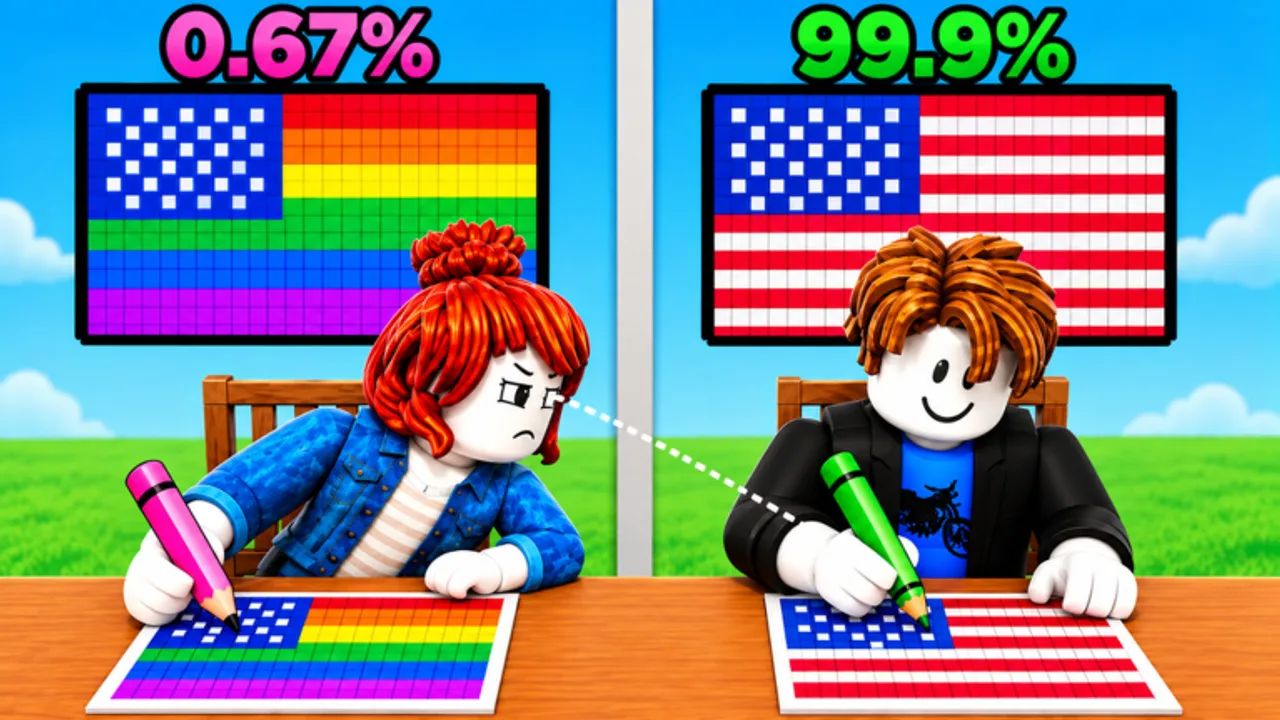
Winning in Draw a Flag! is less about freehand art talent and more about a repeatable pixel method. Meow Forge’s Roblox duel gives you a limited window to rebuild a national flag against an opponent who is racing the same clock. This guide breaks that method into stages: block the big shapes, lay stripes cleanly, place circles and stars with intention, respect crosses and cantons, keep palette discipline, and manage time so you always submit a complete flag.
If you are brand new, skim Getting Started first so lobby and scoring basics are clear. Keep Controls open while you practice tools. When scores plateau, pair this page with Accuracy Tips and competitive decisions in How to Win.
Step 1 — Name the structure before you draw
When the country appears, classify the flag in one breath:
- Horizontal or vertical stripes (count them)
- Bicolor, tricolor, or more bands
- Solid field with a centered emblem
- Canton (corner block) plus field, like many star-and-stripe designs
- Nordic or other cross
- Disc, crescent, or star cluster
That label stops the two most common early losses: mirrored layouts and swapped stripe order. Only then pick your first color.
Step 2 — Block big shapes first
Fill the largest regions before any detail. Backgrounds and broad bands define proportions; stars and crests sit on top of that skeleton. Prefer fill or large brush strokes for fields. If you start with tiny emblems, you will run out of time and leave empty zones that crush accuracy.
Work from outside in: outer rectangle → major bands or canton → secondary shapes → fine icons. After each major fill, step back visually and check whether band widths look equal (or match the real ratios you remember).
Step 3 — Stripes without wobble
Stripes are the backbone of many national flags. Aim for:
- Straight edges aligned to the canvas grid
- Equal widths when the real flag uses equal bands
- Correct top-to-bottom or left-to-right order
Paint guides lightly if needed, then fill. On a coarse pixel canvas, one off-by-one row can make a tricolor look lopsided. Fix stripe math before you decorate. Germany, France, Italy, Russia, Netherlands, and similar designs are won or lost here—not on fancy corners.
Step 4 — Circles, discs, and crescents
Centered discs (Japan, Bangladesh-style layouts, and many others) need both position and size. Place the center first, then expand evenly. A disc that sits too high or too small is instantly recognizable as wrong. For crescents, block the larger circle, then cut or overpaint the inner curve rather than freehanding a banana shape from scratch.
If the timer is short, a slightly simplified but centered disc still scores better than a perfect outline left unfinished.
Step 5 — Stars, crosses, and cantons
Stars: Count them, note arrangement (circle, arc, canton grid), and keep size consistent. A five-point star on a pixel grid is hard—favor a recognizable star silhouette over microscopic points if resolution is limited.
Crosses: Nordic crosses sit offset toward the hoist; Greek-style crosses are more centered. Draw the horizontal bar first, then the vertical, and verify thickness before filling.
Cantons: Block the corner rectangle in the correct color, then add stars or emblems inside it. Do not let canton color bleed into the stripe field.
Watch the mid-article gameplay video for how fast players commit to these structures under pressure—notice how little time they spend dithering on the first color choice.
Color palette discipline
Most flag palettes are small: a few reds, blues, greens, yellows, black, and white. Pick the closest swatch and stick to it for the whole region. Mixing two similar reds on one stripe creates muddy grading. If the UI offers a color picker from the canvas, sample a clean pixel instead of guessing again.
White space matters. Leaving white where the flag should be colored costs; overpainting white emblems with field color also costs. Protect light regions early when they are intentional.
Time management in a duel
Split the timer mentally:
- First third — Structure and main fills only.
- Middle third — Emblems, stars, and edge cleanup.
- Final third — Fix the one worst error, then submit with seconds to spare.
If you are still sketching outlines at the halfway mark, simplify. A clean tricolor without a complex crest often beats a half-drawn coat of arms. Competitive simplification is covered more in How to Win; scoring nuance lives in Accuracy Tips.
Practice drills between matches
- Redraw the same five stripe flags until band widths look automatic.
- Practice one disc flag and one cross flag per session.
- After each loss, write whether the failure was structure, color, or time.
- Use the Tier List plus easiest flags and hardest flags to choose drills that match your weak spots.
Common drawing mistakes to erase from your habits
- Starting with the tiniest star instead of the field
- Reversing stripe order because you remembered colors but not sequence
- Stretching a vertical tricolor as if it were horizontal
- Ignoring the hoist side on cantons and Nordic crosses
- Spending the last ten seconds adding noise instead of fixing a wrong band
Putting it together
A strong Draw a Flag! round looks boring from the outside: quick classification, big fills, measured details, early submit. That boredom is skill. Combine this method with solid tool knowledge from Controls, then pressure-test yourself in live duels. When Meow Forge patches tools or adds content, skim Updates. For gifts, check Codes—as of November 2026 no verified active codes are listed, so focus on craft over code hunting.
Return to the Guides Hub for the full tutorial list. Draw flags like a builder, not a sketch artist, and your accuracy will climb match after match.
Frequently Asked Questions
Quick answers for Draw a Flag players.
What should I draw first on the canvas?
Block the largest fields and stripes first. Emblems, stars, and fine edges come after the main proportions are locked.
How do I keep stripes looking even?
Count rows or columns for each band, fill along the grid, and correct width before adding any detail on top of the stripes.
What if the flag has a complex coat of arms?
Under a short timer, prioritize correct field colors and a simplified but centered emblem. A finished simple version usually outscores an unfinished complex one.
Does palette choice really affect accuracy?
Yes. Using the wrong shade or mixing similar colors on one region lowers fidelity. Pick one swatch per region and stay consistent.
Where should I go after learning this method?
Read Accuracy Tips for scoring details and How to Win for duel pacing, then drill flags from the tier list hardest and easiest pages.