How to Win Draw a Flag! Duels
Pace reading, smart simplification, and mistake avoidance for higher accuracy scores.
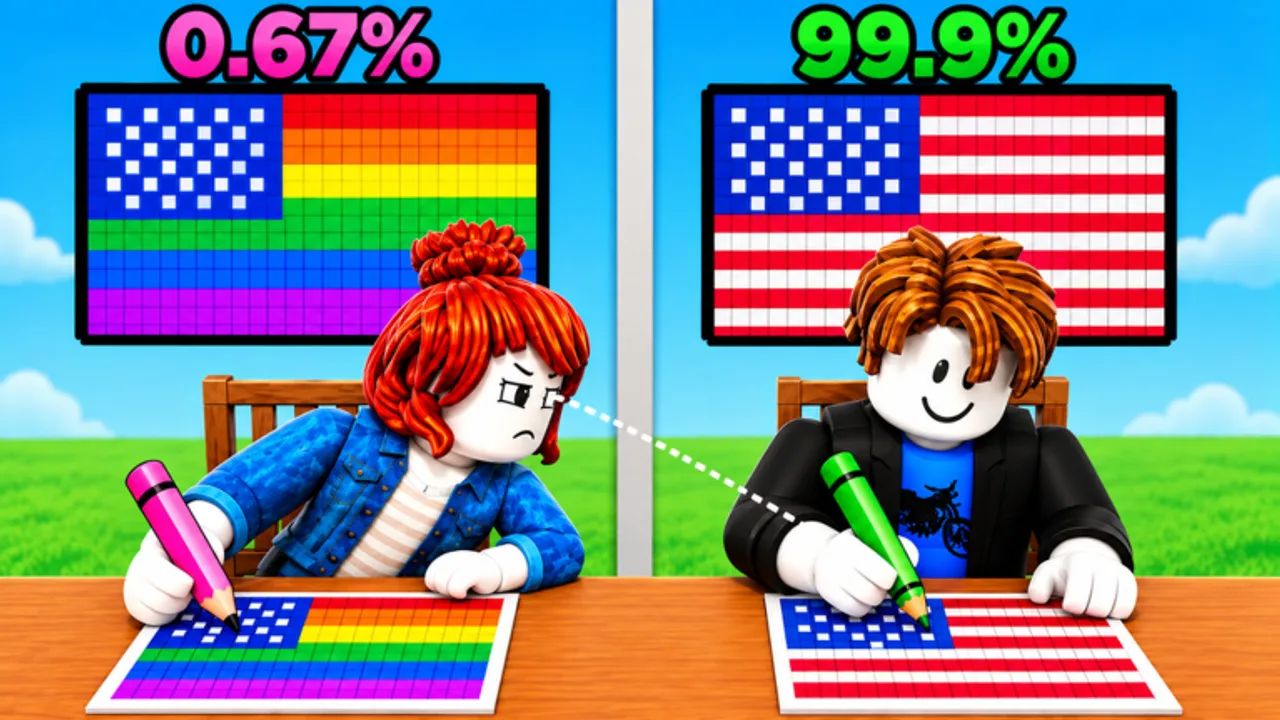
Drawing well is necessary. Winning consistently in Draw a Flag! also means managing pressure, reading your opponent’s pace, and choosing the right level of detail for the flag in front of you. Meow Forge’s Roblox duel grades accuracy against the real national flag while another player races the same timer. This guide focuses on competitive decisions: when to simplify, how to trade polish for completion, which mistakes silently lose matches, and how to build a post-game review habit that compounds.
Foundation pages still matter. Use Getting Started if the lobby is confusing, Controls if tools feel slow, and How to Draw Flags for the shape-first method. Deep scoring science lives in Accuracy Tips. Difficulty context sits on the Tier List.
The win condition, restated
You win when your accuracy score beats your opponent’s. Looking prettier in chat does not matter. A finished flag with correct structure and colors almost always beats a gorgeous half-canvas. Internalize that before every round so ego does not steal your submit buffer.
Read opponent pace without tilting
You may see enough of the other player’s behavior—or simply the shared timer—to sense whether they are flying through fills or stuck on an emblem. Use that information calmly:
- If they submit early, do not panic-scribble. Finish your structure, then decide whether you still have time for stars.
- If they look frozen on a hard crest, double down on clean fields and a simplified center; they may gift you the round by overcommitting.
- Never copy their mistakes. Their wrong stripe order is not a hint—it is a free win if you stay correct.
Pace reading is about allocating your remaining seconds, not trash talk.
Accuracy vs speed: the real tradeoff
Every stroke has an opportunity cost. Ask two questions at the halfway mark:
- Are my main proportions and colors already correct?
- Will the next detail raise score more than fixing an existing error?
If proportions are wrong, stop decorating. If proportions are right and time is low, skip micro-stars and submit. Speed without structure is noise; accuracy without a submit is a zero. Competitive players aim for “good enough complete” on hard prompts and “high fidelity” on easy ones.
When to simplify hard flags
Some designs are traps: dense coats of arms, busy star fields, intricate script, or multi-emblem layouts. Check hardest flags for patterns that punish perfectionism. Simplification rules:
- Keep field colors and stripe or cross geometry exact.
- Reduce the emblem to a recognizable silhouette in the right place and colors.
- Drop tiny peripheral icons if they threaten the timer.
- Protect white or gold detail regions that define the emblem rather than inventing new shapes.
Simplifying is not “giving up.” It is choosing the score components the grader weighs most: layout and dominant colors.
Easy-flag discipline
On prompts from the easiest flags set, opponents also finish. Wins come from cleaner edges, truer shades, and equal band widths. Do not rush a France or Japan into a sloppy submit just because you recognize it. Use leftover time to straighten lines and fix bleeds. Easy flags are where accuracy tips pay the most.
Common mistakes that lose duels
Wrong stripe order — Remembering colors but not sequence (for example, flipping a horizontal tricolor) destroys score even if the brushwork is clean. Say the order out loud before painting.
Mirrored flags — Cantons on the wrong side, Nordic crosses flipped, or vertical bands mirrored relative to the hoist. Orient hoist side first.
Wrong shade — Grabbing a dark red when the flag needs a brighter one, or a navy when it needs a lighter blue. Palette discipline from the drawing guide matters in close matches.
Unfinished corners — Leaving a blank strip along the edge while polishing the center. Fill edges early.
Late clears — Wiping the canvas with almost no time left. Undo locally instead.
Overdetail — Spending the last fifteen seconds on a crest while a stripe is still the wrong width.
Mid-round decision tree
- Classify the flag structure.
- Fill dominant regions with correct colors.
- Check order and hoist orientation.
- Add emblem or stars only if structure is solid.
- At ~30% time remaining, stop new features; only repair and submit.
Tape that tree into your habits until it is automatic.
Mental game between rounds
Tilt loses the next duel before it starts. After a loss, write one cause: structure, color, time, or knowledge gap. Then queue again with a single focus (“equal stripes only” or “submit by final ten”). Browse Updates if something about scoring suddenly feels different after a patch. Ignore unverified code spam; Codes stays honest that as of November 2026 no active promo codes are verified. Skill beats gift hunting for win rate.
Optional Scripts content is not a substitute for practice, and drawing better remains the fair path. When you want creator context, skim Players.
Practice plan for climbing win rate
- Warm up with two easy flags focusing on fidelity.
- Play four live duels with forced early structure.
- Replay any loss once from memory before looking up the real flag.
- End the session on one hard flag using deliberate simplification.
- Review Accuracy Tips weekly so your “good enough” still rises.
Closing mindset
Draw a Flag! rewards calm builders who submit complete, correctly ordered flags. Read pace, simplify on purpose, and refuse the glamorous unfinished canvas. Return to the Guides Hub for the full tutorial set, keep drilling with the tier list, and treat every duel as one decision tree executed under a clock. That is how win rate climbs—not by hoping the next prompt is easy, but by having a plan when it is not.
Frequently Asked Questions
Quick answers for Draw a Flag players.
Is it better to finish early or keep polishing?
Finish structure and colors first. Polish only when proportions are already correct and you still have a safe submit buffer.
When should I simplify a flag?
Simplify complex emblems whenever the timer cannot support full detail. Keep field geometry exact and reduce the crest to a correctly placed silhouette.
What mistakes cost the most points?
Wrong stripe order, mirrored layouts, incorrect shades, and blank unfinished regions usually hurt more than slightly rough edges.
How do I use the tier list while playing competitively?
Know which prompts are easy fidelity tests versus hard simplification tests. Adjust pace and detail level as soon as you recognize the flag family.
Does watching my opponent help?
Use their pace only to budget your own time. Never copy their layout mistakes, and do not panic if they submit early—complete your correct structure.